
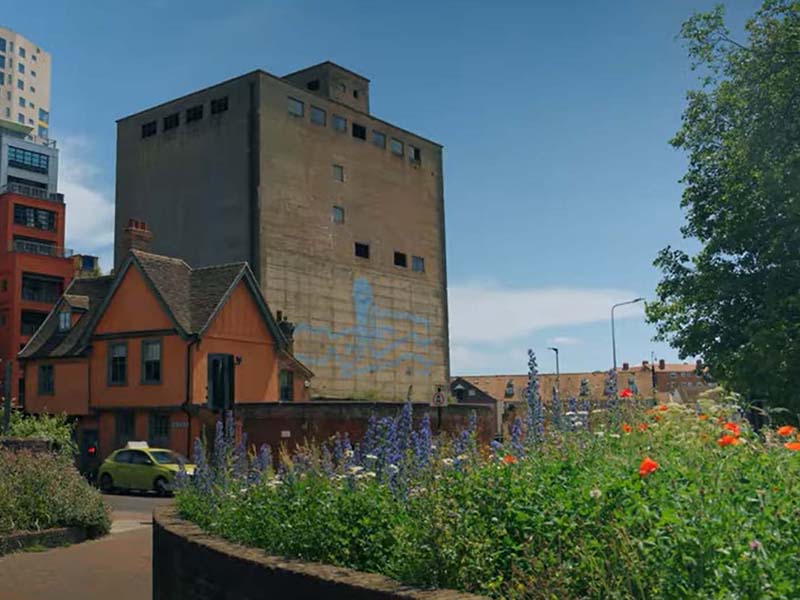
The Urban Climate Walks – Case Study film by the University of Suffolk was made with the collaboration and support of Greener Ipswich CIC. Click on the link below to view the film:
Urban Climate Walks – Case Study
Greener Ipswich CIC is committed to improving the urban environment by regenerating the neglected green spaces in the town. However, this is not just about making our streets look
more attractive. Suitably planting attracts insects which, in turn, boost pollination. Without this inter-connectivity, the balance of nature (and ultimately our well-being) is undermined. There are other ways too in which the right sort of planting can make a positive difference. Carbon dioxide is absorbed by plants and replace by oxygen, thereby improving air quality. Trees in particular can help absorb excess rain and reduce flooding. This could be extremely important if we experience more extreme, concentrated burst of rain after periods of drought when the earth has dried out. Where gardens have been concreted over, surface water quickly accumulates and can rapidly lead to flooding. Rain-gardens, designed at hold excess water can be built into the urban design.
Greener Ipswich CIC collaborates wherever possible with other organisations striving to improve the environment and develop our understanding of how we need to respond to changes in our climate. We are also keen to support individuals interested in how their gardens can respond to current challenges.
We are therefore delighted to promote this short recording. It explains some key findings following a recent urban climate study, undertaken by the Suffolk Sustainability Institute, the
University of Suffolk.
We look forward to promoting the work of other collaborators in the future.
“The shape, size and layout of buildings in the urban landscape, influence the background climate by redistributing natural resources such as channeling winds, shading surfaces and redirecting solar energy.”
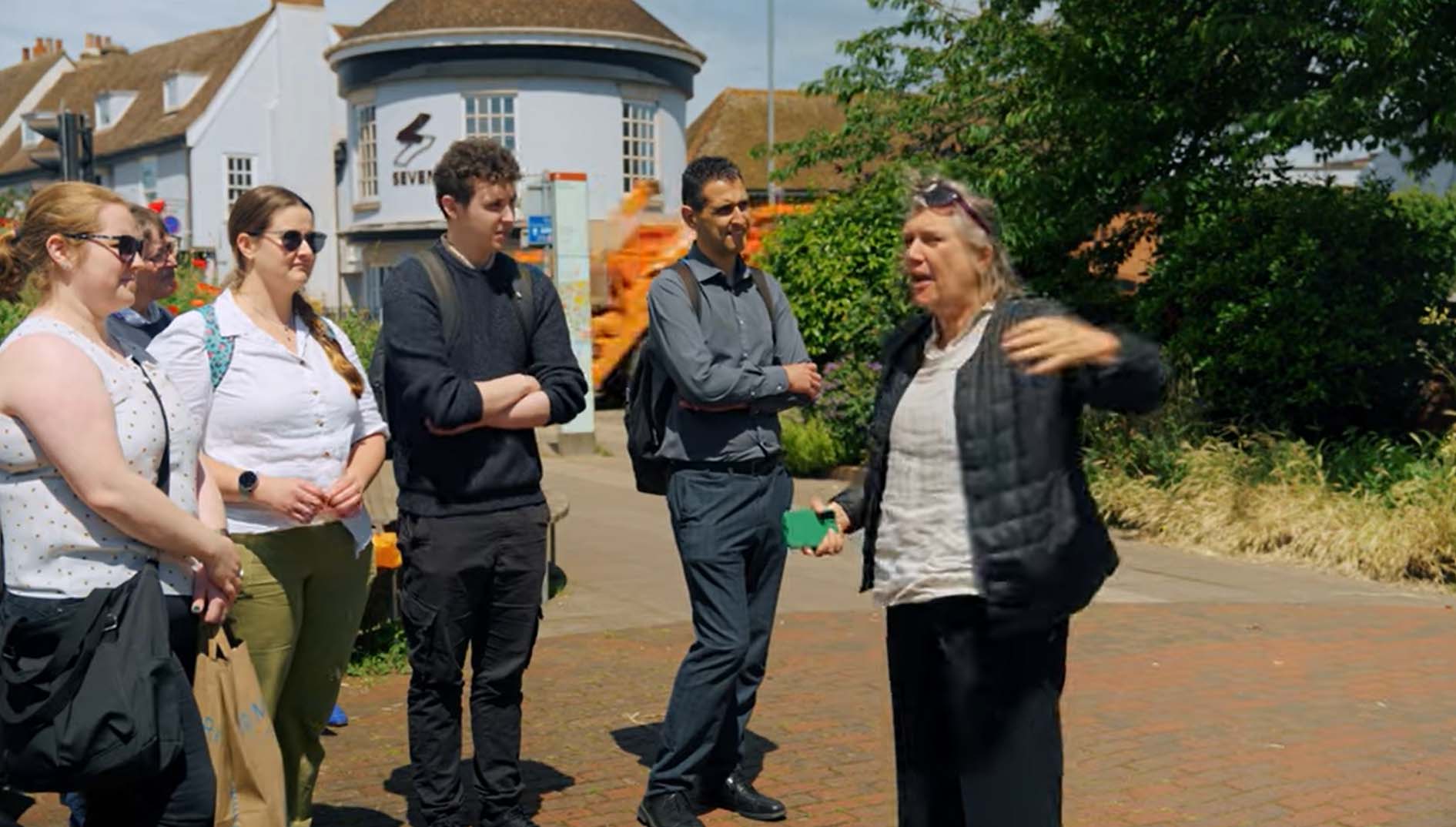
From the Urban Climate Walks – Case Study by University of Suffolk