
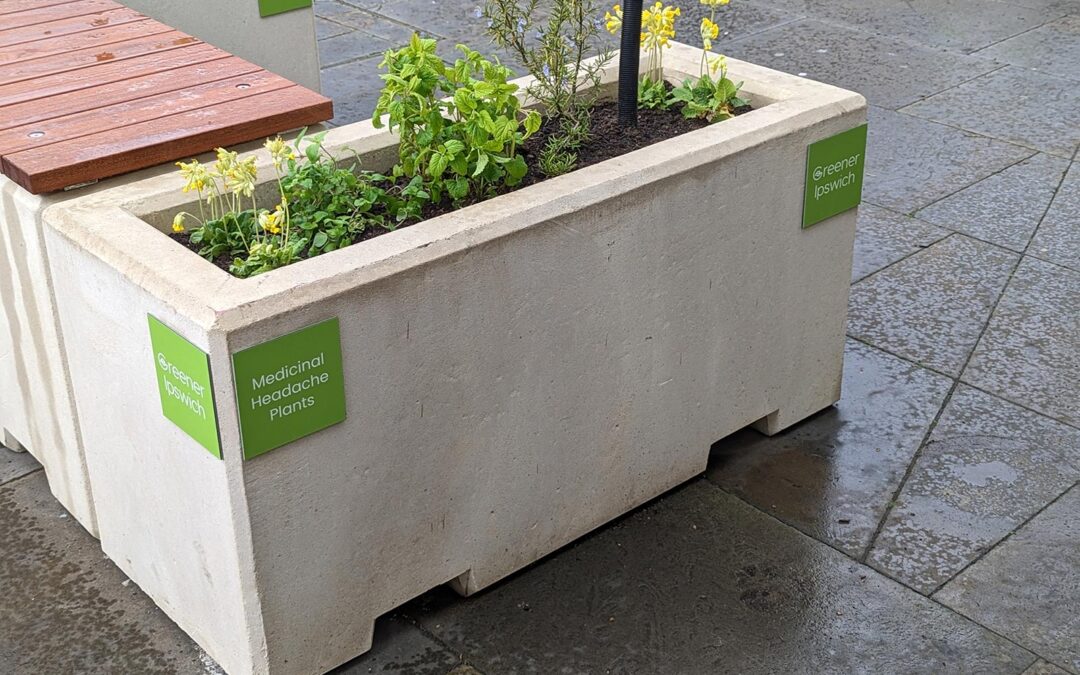
The planters and herb garden at the Wolsey statue is the latest phase of the Greener Ipswich project. It was completed in time for the Coronation of Charles III in May 2023. The main theme is based around Tudor plants, notably those with a medicinal purpose.
Cardinal Thomas Wolsey was thought to be born in Ipswich around 1473 and the town is celebrating the 550th anniversary of his birth with a wide range of activities and events. You can find out more about the Wolsey 550 project on the Ipswich Central website.
Tudor gardens were designed to provide food, medicine, and a place to relax and enjoy the outdoors. The herbs that have been planted near the Wolsey statue are some of the mediaeval healing herbs thought to have beneficial properties for the lungs, heart, digestion and headache. Some of the planters on the southern side have been grouped together and labelled with one of these four themes to create a ‘mini’ medicinal garden.
A more extensive list of herbs chosen for their medicinal properties in Tudor times is provided below.
Some of the herbs that were planted for lung health include:
- Elecampane (Inula helenium): This herb was used to treat coughs, bronchitis, and asthma. It was also used to stimulate the appetite and improve digestion.
- Horehound (Marrubium vulgare): This herb was used to treat coughs, colds, and sore throats. It was also used to relieve congestion and ease breathing.
- Lungwort (Pulmonaria officinalis): This herb was used to treat lung diseases such as bronchitis and pneumonia. It was also used to soothe a sore throat and cough.
- Marjoram (Origanum majorana): This herb was used to treat respiratory problems such as bronchitis and asthma. It was also used to improve digestion and relieve indigestion.
- Thyme (Thymus vulgaris): This herb was used to treat respiratory problems such as bronchitis and asthma. It was also used to improve digestion and relieve indigestion.
Some of the herbs that were planted for heart health include:
- Hawthorn (Crataegus monogyna): This herb was used to improve heart function and circulation. It was also used to treat high blood pressure and angina.
- Motherwort (Leonurus cardiaca): This herb was used to calm the nerves and improve heart function. It was also used to treat anxiety and insomnia.
- Rosemary (Rosmarinus officinalis): This herb was used to improve circulation and memory. It was also used to treat headaches and indigestion.
- Valerian (Valeriana officinalis): This herb was used to calm the nerves and improve sleep. It was also used to treat anxiety and insomnia.
- Yarrow (Achillea millefolium): This herb was used to stop bleeding and improve circulation. It was also used to treat headaches and indigestion.
Some of the herbs that were planted for headache relief include:
- Chamomile (Matricaria recutita): This herb was used to relieve headaches, anxiety, and insomnia. It was also used to soothe the digestive system and reduce inflammation.
- Feverfew (Tanacetum parthenium): This herb was used to prevent and treat migraines. It was also used to reduce inflammation and improve circulation.
- Lavender (Lavandula angustifolia): This herb was used to relieve headaches, anxiety, and insomnia. It was also used to soothe the skin and reduce inflammation.
- Peppermint (Mentha piperita): This herb was used to relieve headaches, nausea, and indigestion. It was also used to improve circulation and reduce inflammation.
- Rosemary (Rosmarinus officinalis): This herb was used to relieve headaches, improve circulation, and improve memory. It was also used to treat anxiety and insomnia.
Some of the herbs that were planted for digestion health include:
- Anise (Pimpinella anisum): This herb was used to relieve indigestion, gas, and bloating. It was also used to stimulate the appetite and improve digestion.
- Caraway (Carum carvi): This herb was used to relieve indigestion, gas, and bloating. It was also used to stimulate the appetite and improve digestion.
- Chamomile (Matricaria recutita): This herb was used to soothe the digestive system and reduce inflammation. It was also used to relieve headaches, anxiety, and insomnia.
- Cinnamon (Cinnamomum zeylanicum): This herb was used to improve digestion and relieve indigestion. It was also used to improve circulation and reduce inflammation.
- Dandelion (Taraxacum officinale): This herb was used to improve digestion and relieve indigestion. It was also used to detoxify the body and improve liver function.
The herbs would be harvested when they were in their prime, and then they would be dried or preserved for later use. The dried herbs would be stored in jars or bags, and they would be used to make teas, infusions, and other herbal remedies.

Planters near the Wolsey statue